
 photo by Sophie Masson
This is a good post about world building. Its important to study world building if you write any genre of novel. The world you build around your characters is essentially a new one, even if it is set in present day Your Town. Here’s more from Sophie Masson.
A couple of weeks ago, I was in an extraordinary place: Rotorua in New Zealand, where bubbling mud pools, shooting geysers and steam-wreathed villages create an amazing otherworldly atmosphere, complete with sound effects ( gurgle, hiss, splash ) and smell ( rotten eggs, burnt toast.)
It’s a place full of stories, of course: Maori legends, tales of historical tragedies, love stories and scary stories. A place to fire the imagination! And one which could be a living example of the idea that setting does not have to be just a backdrop to story, but almost a character in itself.
It’s easy to see that in Rotorua, where the bubbling mud seems ready at any moment to spew out a strange creature, the very hot springs sometimes called murder ripples have a weirdly placid beauty under their clouds of steam, and the fires of the earth’s center are much closer to the surface than is truly comfortable to think about for too long. Here, a writer can–and in my case, does–file away verbal and written impressions as well as photos and videos to help in the creation of a fictional setting that won’t be actually Rotorua, but will be greatly inspired by it. And like the real place, it will be more than just a backdrop.
That kind of real-world setting, which in its extraordinary distinctiveness can seem almost fictional (as, in a contrasting but complementary example, a city like Venice, which I’ve also used in my fiction, does as well) might seem like an easy way into creation of a fictional world. After all, how hard can it be to take elements like boiling mud and clouds of steam and sleeping volcanoes—or gondolas and bridges and golden-domed palaces–and fictionalize them? Don’t all you need to do is simply faithfully transcribe what your senses tell you?
Newsflash: What must be believed in real life because you see it (and smell it!) in front of your nose is not so obvious when you’re dealing with fiction. You…
READ MORE HERE:
Source: Using Real-World Places to Inspire Fictional Settings
 I’ve had trouble since the beginning trying to learn how to format my books for Kindle and then for all the other sites. Kindle accepts only a .MOBI file. What is a .mobi file? It’s the type of formatted book file that will get your book on Kindle. That’s my complicated and very scientific explanation. Your book is changed from a Word .doc to a Mobi.

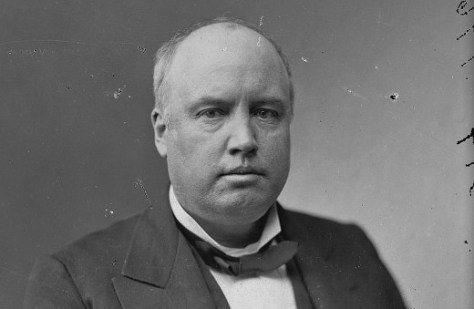
 In 1887, American lawyer and famed orator Robert G.. Ingersoll sent to his future son-in-law, Walston, a bottle of the finest whiskey and a letter, reprinted below, in which he poetically sang its praises.. The alcohol was enjoyed, but not as much as the letter, which was so loved that it soon circulated amongst family, friends, and strangers, and was eventually printed in American newspaper The Nation to be read and adored by the masses. But not all. Ingersoll’s letter was also spotted by a resoundingly unimpressed Rev. Dr. J. M. Buckley, editor of The Christian Advocate, who responded by publishing a letter of his own, also seen below.
 The photo is for “comic relief”. From the series: Instant Publisher.com
 I would like to add a series about writing from Instant Publisher.com. Hope you enjoy.





 Sadly, one of my neighbors will be moving to a different country soon, so she had a big garage sale to get rid of a lot of stuff, good stuff. She’s moving from here to Japan., going from big to small. I bought a purse from her. It’s a lovely purse, and a purse is a purse is a purse, unless it’s a suitcase.
 Rebecca Nolen