
112: How Your Surroundings Ignite Your Creativity (And What To Do About It) with Eric Weiner

I used to believe that creative work was mysterious.. That coming up with a good idea, finding inspiration, or writing a blog post or book wasn’t something I could plan for, but was something I had to wait to happen to me. I’m not alone in this, either.

There’s a shroud of mystery that surrounds creative work. And I totally get it. Creative ideas can at times appear out of nowhere. And when I’m most in need of creative inspiration, it can be hard to find.

So, is creativity something you can plan for?

Well, the answer is yes and no.

You see, there’s no exact science, formula, or process you can follow to successfully yield creative results 100% of the time. What works for some people doesn’t necessarily work for others.

However, you can teach yourself how to become more creative, learn how to identify good ideas, and even change your surroundings or the place you live to improve your creative work.

This week on The Portfolio Life, Eric Weiner and I talk about why creative work flourishes in certain places today and throughout history. Eric discovered in his research and travels a significant connection between the place you live, your surroundings, and the influence they have on your personal creativity.

Listen in as Eric shares the common elements that not only lead certain places to become more creative, but will also help you to improve your personal creativity.

READ MORE AND LISTEN TO THE PODCAST:


Source: 112: How Your Surroundings Ignite Your Creativity (And What To Do About It) with Eric Weiner

How to Keep Writing When You Want to Quit

Note: This is a guest post by Ali Luke.. Ali has been writing for a living for eight years, and she blogs weekly about the art, craft, and business of writing on her site Aliventures .. You’re at your desk, and the words just aren’t flowing.. You feel like getting up and walking away from your writing… and never coming back..

However much you love writing, it’s hard at times. It can feel like a relentless, unrewarding slog.

And those doubts (that were at the back of your mind all along) start getting louder:

“No one cares about what I write.”

“No one’s ever going to read this.”

“I’m wasting my time.”

I’m too old (or too young) to be a writer.”

“I might as well give up.”

… and maybe you do give up, for a day or a month or even years – but writing draws you back in.

Trust me, I know what it feels like. I’ve been writing for a living for eight years now, and writing novels for far longer, and I still find myself questioning. Doubting. Thinking about quitting.

Sometimes, of course, quitting is sensible. There’s no point carrying doggedly on with a project that you’ve long ago lost all interest in.

But often, quitting isn’t the right choice. A week later, or a month later, or five years later, you find yourself wishing you’d just stuck with writing a little longer.

(After all, since you’re reading this post, it’s a safe bet that deep down you don’t want to give up.)

Here’s how to decide when to stick with it and when to quit, whether you’re considering giving up on a single project, or writing altogether.

#1: Should You Give Up on a Writing Session?

Twenty minutes into your planned writing hour, you’ve accomplished precisely nothing. Maybe you wrote a sentence or two, hated them, and promptly deleted them. You’re feeling very, very tempted to give up and try again tomorrow.

Occasionally, this might be the right choice. If you’ve hit a block in your work-in-progress, for instance, perhaps you need to take a step back and do some extra planning.

Often, though, the reluctance is because you’re tired or in a bad mood or overwhelmed. So:

  • Set a timer for five minutes, and write—without deleting!—until your time is up. You can do anything for five minutes, however much you don’t feel like it initially.
  • Now, reassess. Do you want to carry on? If you still really don’t feel like writing, stop. Be kind to yourself. You might want to spend a few extra minutes journaling about why you’re feeling blocked, or what’s going on in the rest of your life.

Of course, one skipped session isn’t going to derail your project – just like one cupcake isn’t going to ruin your diet.

The problem is that one skipped session usually leads to another – and the longer you spend away from your work, the more resistance you’ll feel toward getting started again.

#2: Should You Give Up on Your Work in Progress?

TO CONTINUE READING Go to the Source: How to Keep Writing When You Want to Quit

The mingled souls of wheat and corn

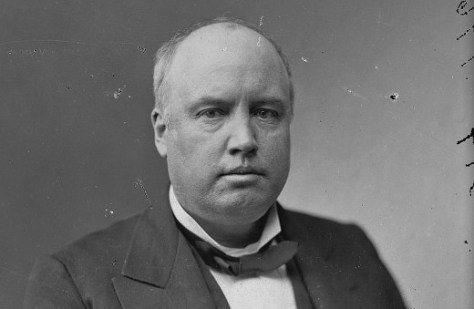
(Photo: Robert G. Ingersoll, via Library of Congress.)In 1887, American lawyer and famed orator Robert G.. Ingersoll sent to his future son-in-law, Walston, a bottle of the finest whiskey and a letter, reprinted below, in which he poetically sang its praises.. The alcohol was enjoyed, but not as much as the letter, which was so loved that it soon circulated amongst family, friends, and strangers, and was eventually printed in American newspaper The Nation to be read and adored by the masses.  But not all. Ingersoll’s letter was also spotted by a resoundingly unimpressed Rev. Dr. J. M. Buckley, editor of The Christian Advocate, who responded by publishing a letter of his own, also seen below.
89 Fifth Avenue
New York

Walston H. Brown, Esq.

April 16, 1887

My dear Friend,

I send you some of the most wonderful whiskey that ever drove the skeleton from a feast or painted landscapes in the brain of man. It is the mingled souls of wheat and corn. In it you will find the sunshine and the shadows that chased each other over the billowy fields; the breath of June; the carol of the lark; the dews of night; the wealth of summer and autumn’s rich content, all golden with imprisoned light.

Drink it—and you will hear the voices of men and maidens singing the “Harvest Home,” mingled with the laughter of children.
Drink it—and you will feel within your blood the star-lit dawns, the dreamy, tawny dusks of many perfect days.

For forty years this liquid joy has been within the happy staves of oak, longing to touch the lips of men.

Yours always,
R. G. Ingersoll


———————–

My dear Bob,

I return to you some of the most wonderful whiskey that ever brought a skeleton into the closet or painted scenes of lust and bloodshed in the brain of man. It is the ghost of wheat and corn, crazed by the loss of their natural bodies. In it you will find a transient sunshine chased by a shadow as cold as an Arctic midnight, in which the breath of June grows icy, and the carol of the lark gives place to the foreboding cry of the raven.

Drink it—and you will have woe, sorrow, babbling and wounds without cause. Your eyes shall behold strange women and your heart shall utter perverse things.
Drink it—and you shall hear the voices of demons shrieking, women wailing, children mourning the loss of a father who yet lives.
Drink it—and long serpents will hiss in your ears, coil themselves about your neck and seize you with their fangs. ‘At last it biteth like a serpent and stingeth like an adder.’

For forty years this liquid death has been confined with staves of oak, harmless there as pure water. I send it to your mouth to steal away your brains, and yet I call myself your friend.

Rev. Dr. J. M. Buckley

Source: The mingled souls of wheat and corn

This is from me, I miss getting real letters, don’t you?